Search engine optimization (SEO) is one of the most powerful ways to increase website visibility, attract qualified visitors, and generate business growth. However, when businesses start investing in SEO, they often encounter an important question: technical SEO vs on page SEO—which one matters more?
Understanding the difference between technical optimization and on-page optimization is essential for improving search rankings and website traffic.
Think of your website as a house. Technical SEO builds the foundation, electrical system, and structure. On-page SEO furnishes the rooms, adds decorations, and creates a welcoming environment for visitors. Without a solid foundation, the house won’t stand. Without attractive interiors, people won’t want to stay.
In this comprehensive guide, you’ll learn the key differences between technical SEO vs on page SEO, how each affects rankings, and how combining both can significantly increase website traffic in 2025 and beyond.
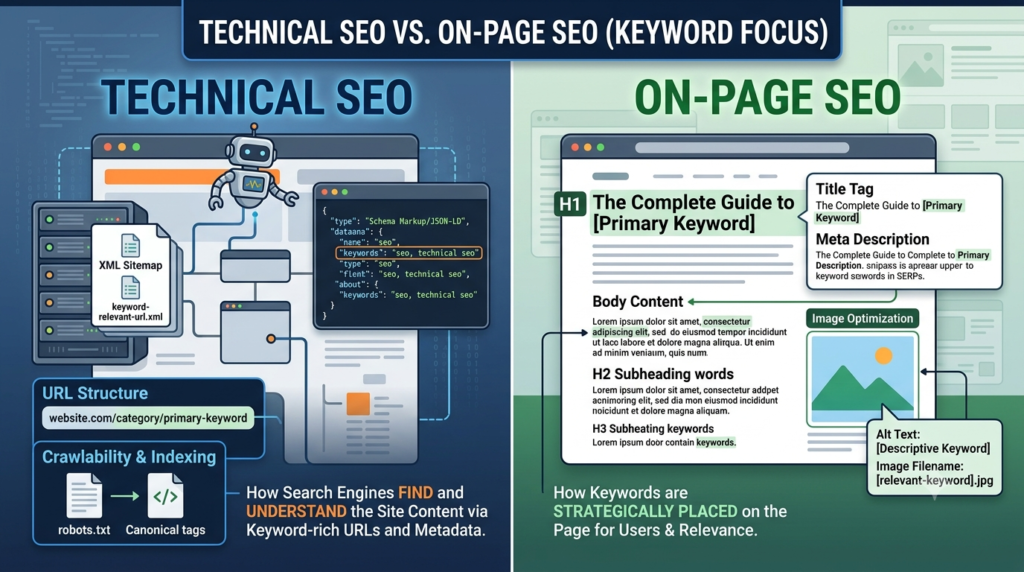
What Is Technical SEO?
Technical SEO focuses on optimizing the backend elements of a website so search engines can easily crawl, understand, and index its pages.
Unlike content optimization, technical SEO deals with the website’s infrastructure and performance.
Core Components of Technical SEO
Some of the most important technical SEO elements include:
- Website loading speed
- Mobile responsiveness
- Secure HTTPS connection
- XML sitemap configuration
- Robots.txt optimization
- Canonical tags
- Structured data implementation
- Crawl error management
- Core Web Vitals optimization
- URL structure improvements
The goal is to make your website technically accessible and search-engine friendly.
Why Technical SEO Matters
Even the most informative content can struggle to rank if search engines encounter technical issues while crawling your website.
Benefits of Technical SEO
Faster Website Performance
Visitors expect pages to load quickly. A slow website often results in higher bounce rates and lower engagement.
Better Search Engine Crawling
Technical SEO helps search engine bots navigate your site efficiently and discover important pages.
Improved User Experience
Users are more likely to stay on websites that are fast, secure, and mobile-friendly.
Enhanced Indexing
A technically optimized website ensures that valuable pages appear in Google’s index.
Stronger Search Visibility
When technical barriers are removed, search engines can better evaluate and rank your content.
What Is On Page SEO?
On-page SEO refers to optimizing the visible elements of a webpage to improve relevance and user experience.
It involves creating content and page structures that help both users and search engines understand the topic.
Key Elements of On Page SEO
On-page optimization typically includes:
- Keyword research and placement
- SEO-friendly titles
- Meta descriptions
- Heading hierarchy
- Internal linking
- Content quality
- Image optimization
- User intent matching
- Readability enhancements
- URL optimization
The objective is to make each page as useful and relevant as possible.
Why On Page SEO Is Important
Search engines aim to deliver the most relevant results to users. On-page SEO helps demonstrate that your content deserves to rank.
Higher Keyword Rankings
Well-optimized content makes it easier for Google to understand page topics.
Better Click-Through Rates
Compelling titles and descriptions encourage more users to visit your site.
Increased User Engagement
Helpful content keeps visitors reading and exploring.
Improved Conversions
When content addresses customer needs, visitors are more likely to take action.
Key Differences Between Technical SEO and On-Page Optimization
Although they share the same goal, their methods are very different.
| Technical SEO | On Page SEO |
| Focuses on website infrastructure | Focuses on content and page elements |
| Improves crawlability | Improves relevance |
| Deals with backend optimization | Deals with front-end optimization |
| Helps search engines access pages | Helps search engines understand pages |
| Often handled by developers and SEO experts | Often handled by content creators and SEO specialists |
Understanding technical SEO vs on page SEO helps businesses create a balanced optimization strategy.
Which SEO Strategy Should You Prioritize?
One of the most common misconceptions is that one type of SEO is more important than the other.
In reality, both are essential.
Consider these scenarios:
Scenario 1: Great Content, Poor Technical SEO
Your articles may be outstanding, but if search engines cannot properly crawl or index them, rankings will remain limited.
Scenario 2: Perfect Technical Setup, Weak Content
Your site may be lightning-fast and technically flawless, but poor content won’t satisfy user intent.
Scenario 3: Strong Technical SEO + Strong On Page SEO
This combination creates the ideal environment for sustained ranking growth and increased traffic.
The most successful websites focus on both areas simultaneously.
How Technical SEO Impacts Organic Traffic
Technical SEO directly influences how efficiently search engines interact with your website.
Website Speed Optimization
Google values fast-loading websites because users prefer them.
Faster websites often experience:
- Lower bounce rates
- Higher engagement
- Better rankings
Mobile Optimization
Google primarily uses mobile-first indexing. If your website performs poorly on smartphones, rankings may suffer.
Site Security
HTTPS encryption improves trust and protects visitor information.
Crawl Efficiency
Search engines have limited crawl resources. A technically optimized website helps bots discover more important pages.
Structured Data
Schema markup can improve search visibility through rich results and enhanced listings.
How On Page SEO Impacts Organic Traffic
On-page SEO directly affects how relevant your content appears for specific search queries.
Optimized Content
Content should provide clear, useful answers to user questions.
Strategic Keyword Usage
Keywords should appear naturally in:
- Titles
- Headings
- Introduction
- Body content
- Image alt text
Internal Linking
Connecting related pages improves navigation and distributes authority across the website.
User Experience
Content that is easy to read often performs better than overly complex content.
Search Intent Alignment
Matching user expectations is one of the strongest ranking factors today.
Essential Website Optimization Techniques for Better Search Visibility
To stay competitive, implement the following technical SEO improvements:
Optimize Core Web Vitals
Focus on improving:
- Largest Contentful Paint (LCP)
- Interaction to Next Paint (INP)
- Cumulative Layout Shift (CLS)
Improve Site Architecture
Create a logical structure that helps both users and search engines navigate your website.
Fix Broken Links
Regularly identify and repair broken internal and external links.
Submit XML Sitemaps
Help search engines discover your content more efficiently.
Use Canonical Tags Correctly
Prevent duplicate content issues by identifying preferred page versions.
Essential Content Optimization Techniques for Better Rankings
Modern on-page SEO extends beyond keyword placement.
Create Comprehensive Content
Publish content that answers user questions completely.
Write Engaging Headlines
Strong headlines increase clicks and engagement.
Optimize Meta Descriptions
Although not a direct ranking factor, they influence click-through rates.
Improve Readability
Use:
- Short paragraphs
- Bullet points
- Subheadings
- Simple language
Update Existing Content
Refreshing older pages can improve rankings and maintain relevance.
Common Technical SEO Mistakes
Avoid these errors:
Slow Website Speed
Performance issues negatively affect user experience and rankings.
Poor Mobile Design
A desktop-only experience limits visibility.
Duplicate Pages
Multiple versions of the same content can confuse search engines.
Missing HTTPS
Security remains a trust signal for both users and Google.
Crawl Errors
Unresolved crawl issues may prevent important pages from appearing in search results.
Common On Page SEO Mistakes
Many websites unknowingly damage rankings through poor content practices.
Keyword Stuffing
Overusing keywords creates a poor reading experience.
Thin Content
Pages with little value often struggle to rank.
Weak Headlines
Uninspiring titles reduce click-through rates.
Missing Internal Links
Disconnected pages lose opportunities for authority distribution.
Ignoring User Intent
Content that doesn’t answer user questions rarely performs well.
Why a Balanced SEO Strategy Delivers Better Results
The debate around technical SEO vs on page SEO often leads businesses to focus too heavily on one area.
However, SEO success comes from integration.
Technical SEO ensures search engines can access and evaluate content.
On-page SEO ensures that content deserves to rank.
When combined, these strategies help:
- Improve search visibility
- Increase website traffic
- Enhance user experience
- Boost engagement
- Generate more leads and sales
The highest-ranking websites typically excel in both categories.
Frequently Asked Questions (FAQs)
What is the difference between technical SEO and on-page optimization?
Technical SEO improves website infrastructure and crawlability, while on-page SEO focuses on content quality and page optimization.
Can a website rank with only on-page SEO?
A website may rank to some extent, but technical issues can limit visibility and performance.
How long does it take to see results from SEO efforts?
SEO is a long-term strategy. Most websites start seeing noticeable improvements in rankings and organic traffic within 3 to 6 months, depending on competition, website quality, and optimization efforts.
How often should technical SEO audits be performed?
Monthly reviews and quarterly comprehensive audits are recommended.
Can website speed affect search engine rankings?
Yes. A fast-loading website provides a better user experience and can improve search rankings. Faster websites typically have lower bounce rates, higher engagement, and better chances of attracting organic traffic.
Which SEO type delivers faster results?
On-page SEO changes can sometimes show results more quickly, while technical SEO creates long-term ranking stability.
Should small businesses invest in technical SEO?
Yes. Even small websites benefit from faster speed, mobile optimization, and proper indexing.
Conclusion
The discussion around technical SEO vs on page SEO shouldn’t be about choosing a winner. Both are essential components of a successful SEO strategy.
Technical SEO creates the framework that allows search engines to discover and understand your website. On-page SEO ensures that your content is relevant, engaging, and valuable to users.
Businesses that invest in both areas consistently outperform competitors, achieve stronger rankings, and generate more organic traffic.
If your goal is sustainable online growth, focus on building a technically sound website while continuously improving your content and user experience.
Need Professional SEO Services?
Take your website rankings and traffic to the next level with expert SEO solutions.
🌐 Visit: www.bhagatsinghdigital.com
📞 Call Now: +91-8905335392
Whether you need Technical SEO, On-Page SEO, Local SEO, or a complete digital marketing strategy, our team is ready to help your business grow online.